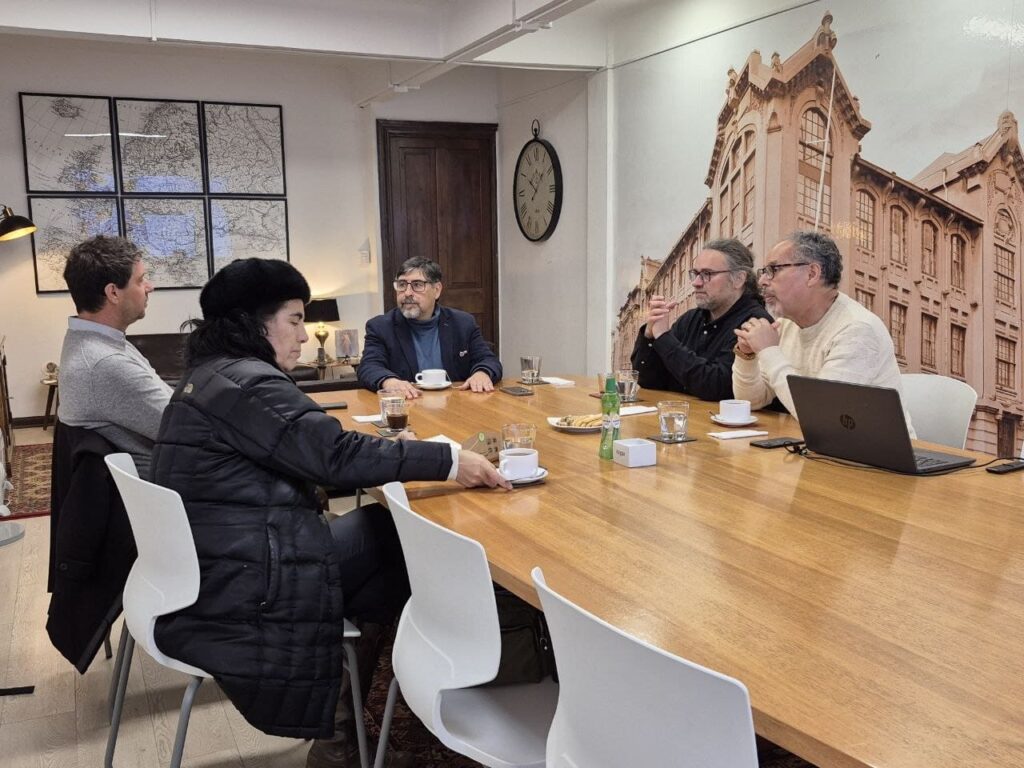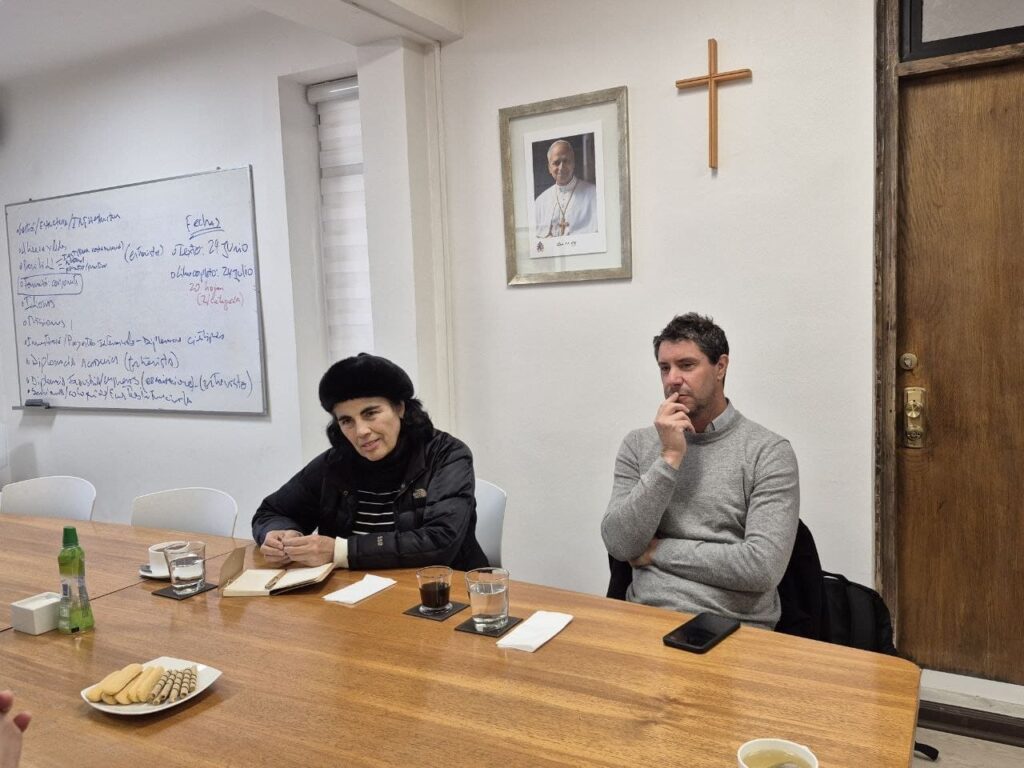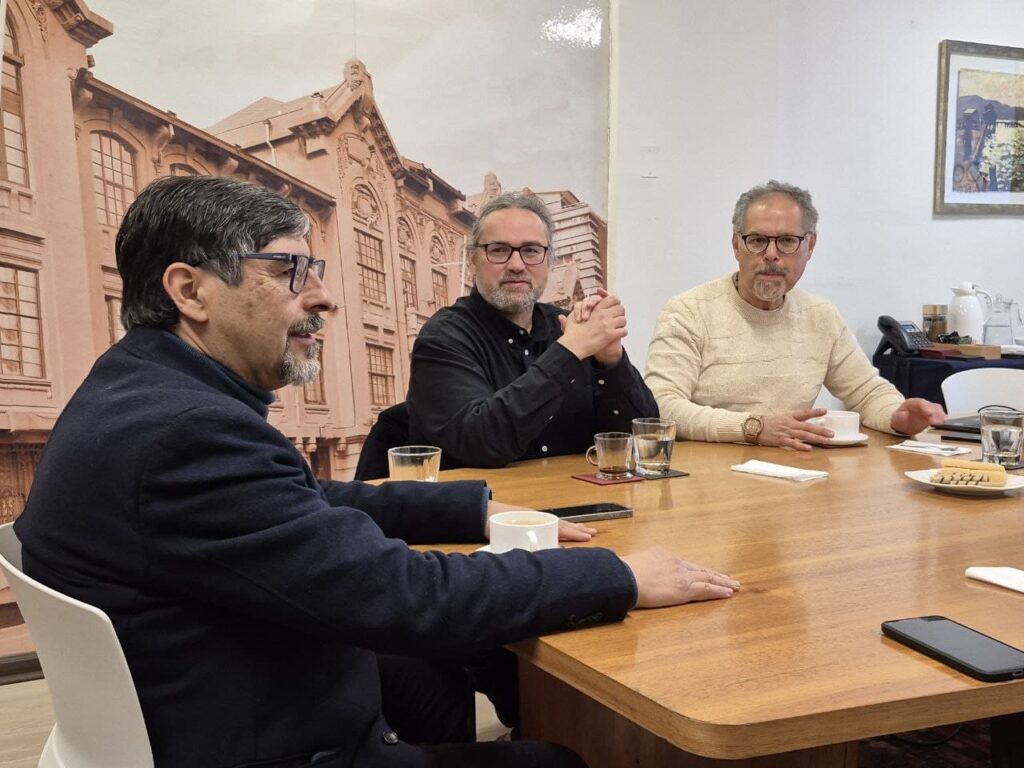
The Pontifical Catholic University of Valparaíso (PUCV) continues to strengthen its international ties in the field of applied research on disaster risk management. In this context, the Director General of International Affairs, Orlando de la Vega Luna, along with Dusan Boric Bargetto, Head of International Projects at the Research Directorate of the Vice-Rectorate for Research, Creation, and Innovation, held a meeting with Dr. Loïc Le Dé, a professor at Auckland University of Technology (AUT) in New Zealand, with the aim of reviewing the progress of a scientific collaboration between Chile and New Zealand and exploring new opportunities for international cooperation.
The event also featured the participation of Professor Marfilda Sandoval, a faculty member at the Metropolitan Technological University (UTEM), and Dr. Rodrigo Figueroa Sterquel, a researcher at the PUCV Institute of Geography and director of the FOVI250272 project. During the meeting, the strategic value of the network established between PUCV, UTEM, and AUT was highlighted, as well as its contribution to the development of applied knowledge to strengthen coastal resilience and disaster risk management in communities in south-central Chile.
The New Zealand scholar’s visit is taking place as part of the project “Strengthening the Tri-institutional Network (PUCV-UTEM-AUT) for the Co-creation and Transfer of Participatory Tools for Coastal Urban Flood Risk Management in the South Central Node,” an initiative funded by the National Agency for Research and Development (ANID). The project aims to strengthen scientific collaboration between the two nations to address the challenges associated with climate change through the development of innovative tools for risk prevention and management.
One of the most significant aspects of this collaboration has been the organization of participatory workshops with technical teams from the municipalities of Navidad and Cartagena, aimed at integrating local perceptions of risk into spatial planning and disaster risk reduction tools. Additionally, the project includes the development of technological solutions based on geographic information systems (GIS), capable of transforming data provided by communities into tools for planning and responding to coastal flooding.
The visit also included academic and training activities for students and young researchers, including international seminars on participatory approaches to risk management and specialized mentoring programs.
For PUCV, initiatives of this kind help strengthen the internationalization of research and foster the development of innovative solutions to global challenges, promoting academic cooperation as a key tool for building more resilient and sustainable communities.