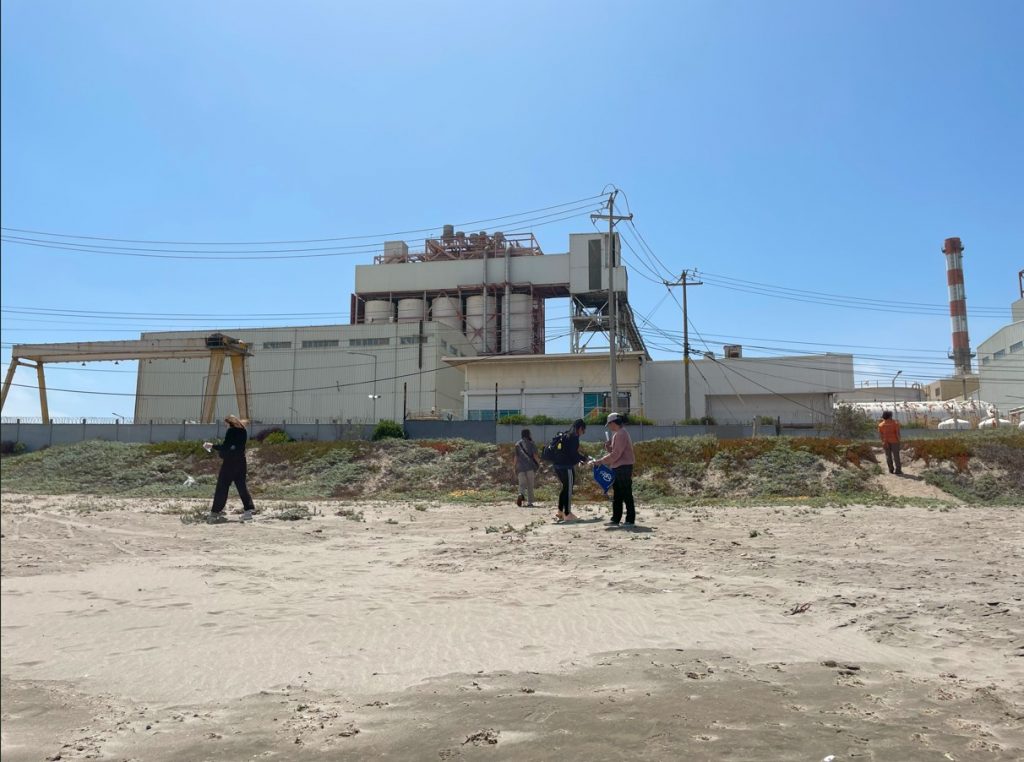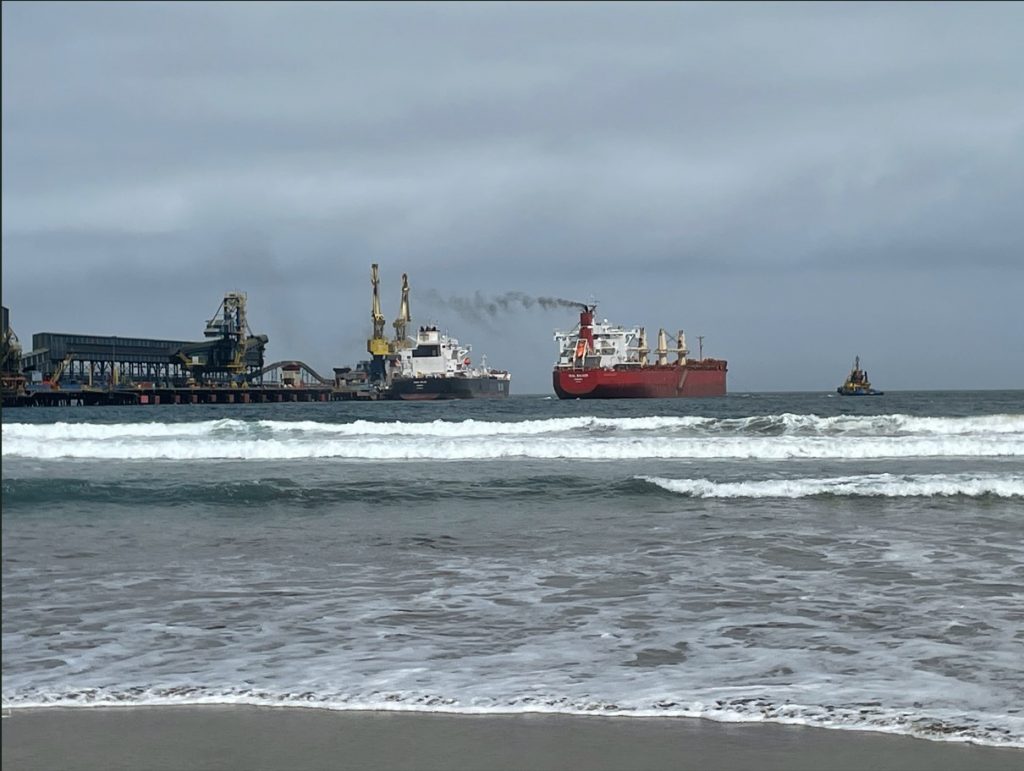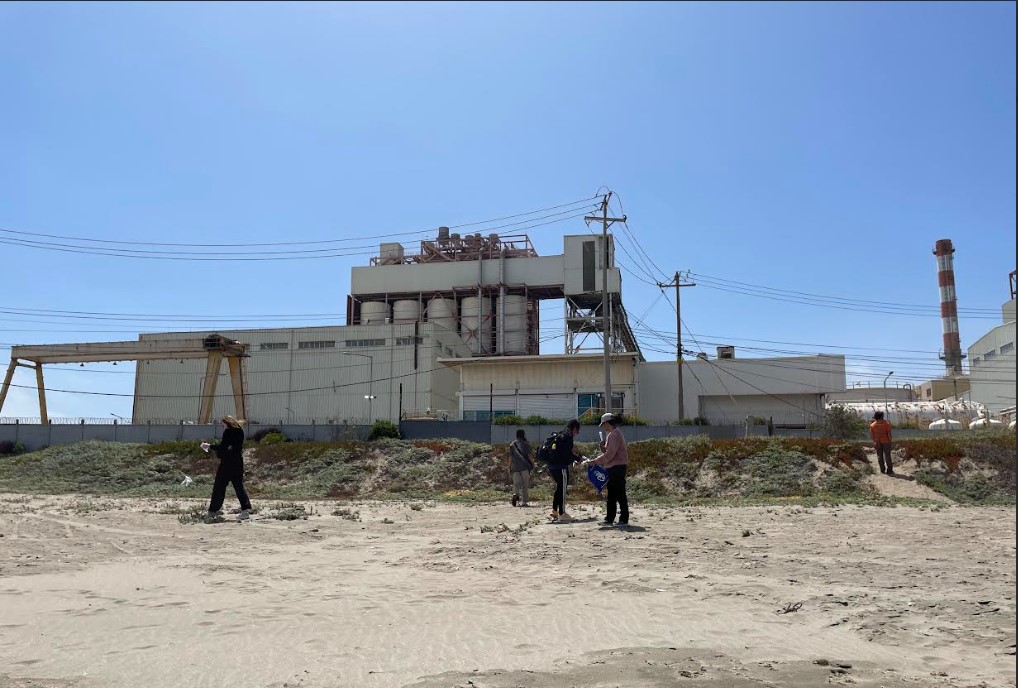
Last Wednesday, November 13, 2024, the students of the course There is no place to hide: environmental humanities and climate change studies in Latin America, accompanied by their professor Pedro Pablo Achondo, went on a field trip to the complex territory called Zona de Sacrificio Socioambiental in Las Ventanas Bay, in the region of Valparaíso, Chile.
When they arrived at the site, at the edge of the contaminated beach, Ana María and Mercedes, two women fighters, activists and deeply committed to the defense of their territory, their families and their community, were waiting for them. They shared with the students the history of Ventanas since the arrival of the 18 companies that now invade the bay.
After an hour of conversation, the students conducted an exercise based on the "affective ecologies" present at the site. Each student walked the beach for an hour, moving among the immense iron structures and pipes that penetrate the ocean. They reflected on what happened in that space, how this situation came about and why it is still not possible to reverse it.
Through a work guideline, the students were able to connect affectively with this socially and environmentally wounded space. Afterwards, they shared lunch and returned to the university.
The subsequent reflections, accompanied by photographs and records made by the students, showed not only an affective connection with the place, but also a deepening of the concepts, ideas and perspectives worked on in classes during the semester.
This type of activity allows the students of the PUCV Spanish Center to broaden their views and generate significant learning about the socio-environmental problems of the region.