The Pontifical Catholic University of Valparaíso hosted a new edition of Falling Walls Lab Valparaíso, Chile 2026, an event that brought together young researchers, students, professionals, and entrepreneurs to present projects aimed at addressing scientific, technological, and social challenges.
The event is part of Falling Walls Lab, an initiative linked to the annual conference organized by the Falling Walls Foundation, an international platform based in Germany that promotes ideas capable of helping to break down barriers through science, innovation, and technology.
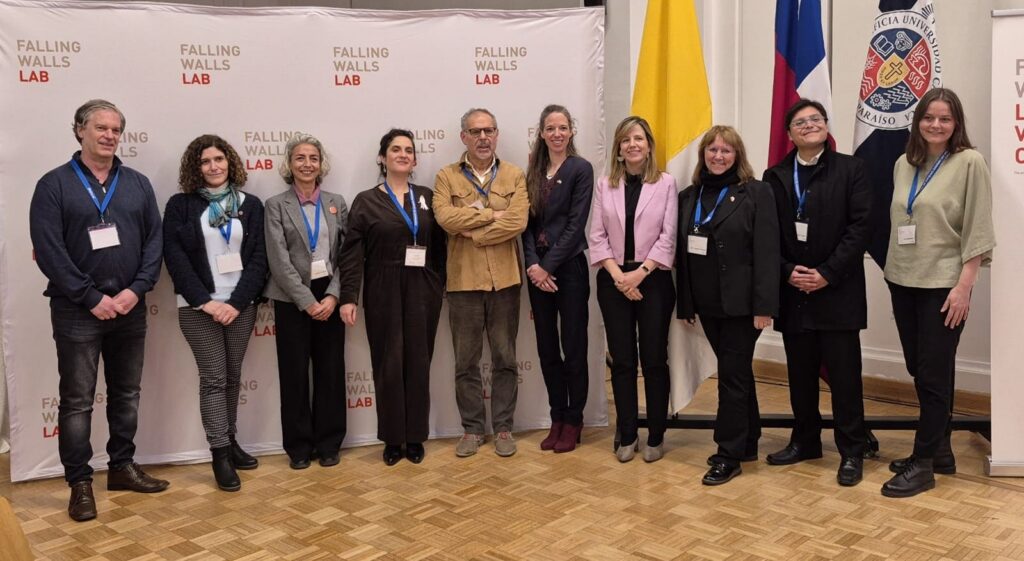
The event was attended by Orlando de la Vega Luna, Director General of International Affairs at PUCV, who delivered a welcome address on behalf of the university and later served on the jury tasked with evaluating the finalist proposals.
Also participating were Carola Bruhn, Minister-Counselor and Head of the Economic, Scientific, and Environmental Affairs Section at the German Embassy in Chile; Alina Neumeyer, a DAAD (German Academic Exchange Service) lecturer in Valparaíso; and Isabel Franco, executive director of Fundación Ciencia Joven.
They were joined, via video messages, by Sascha Hannon, Director of International Network Projects for the Americas Region at the Falling Walls Foundation, and Guillermo Anlló, Senior Specialist in the Science, Technology, and Innovation Policy Program at UNESCO’s Regional Office for Science in Latin America and the Caribbean.
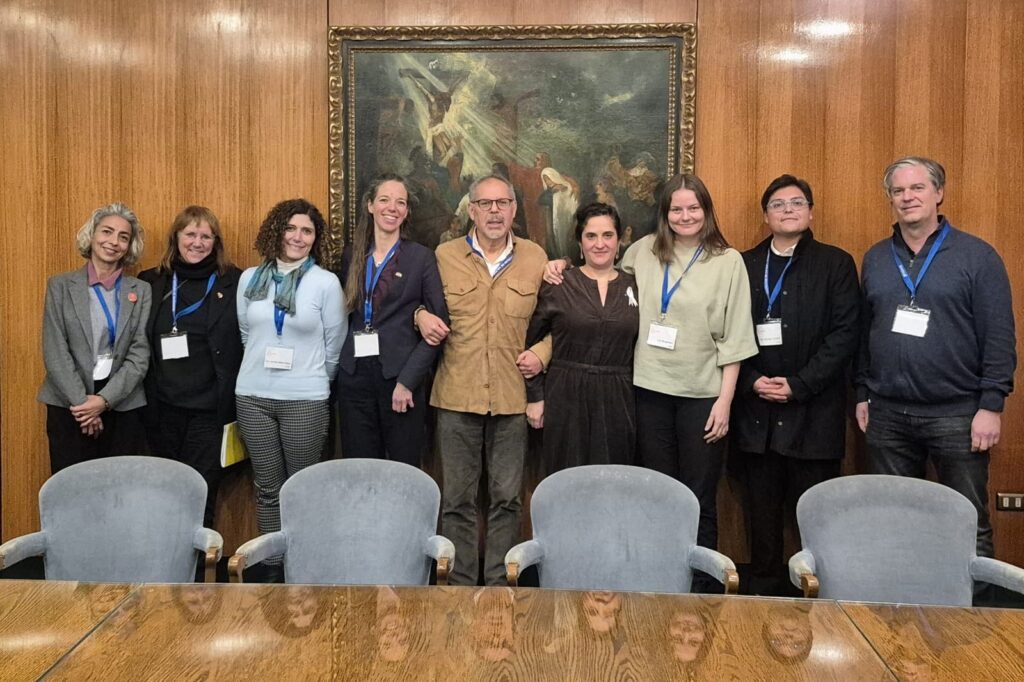
The jury was composed of representatives from the academic, scientific, diplomatic, and business communities. Participants included Carola Bruhn, Minister-Counselor and Head of the Economic, Scientific, and Environmental Affairs Section at the German Embassy in Chile; Orlando de la Vega Luna, Director General of International Affairs at PUCV; Gudrun Kausel, representative of the German Research Foundation (DFG) and professor at the Universidad Austral de Chile; Carmen Gloria Feijoo, full professor at the Universidad Andrés Bello and Science Ambassador for the Alexander von Humboldt Foundation in Chile; Lea Bergmann, DAAD lecturer at the University of Talca; Nicolás Trujillo, professor and researcher at Alberto Hurtado University and specialist in science, technology, and innovation policy; and Thilo Schaller, head of strategic projects and innovation at the Chile-Germany Chamber of Commerce and Industry (AHK Chile).
This edition marked a milestone for Falling Walls Lab in Chile. The initiative has been taking place in the country since 2016, spearheaded by DAAD Chile in partnership with Fundación Ciencia Joven. Since 2022, PUCV has participated as the host institution and a collaborator for the final event.
After five years of collaboration, the Falling Walls Foundation decided that, starting in 2026, the event will be officially renamed Falling Walls Lab Valparaíso, Chile, thereby strengthening the initiative’s ties to the city and the university.
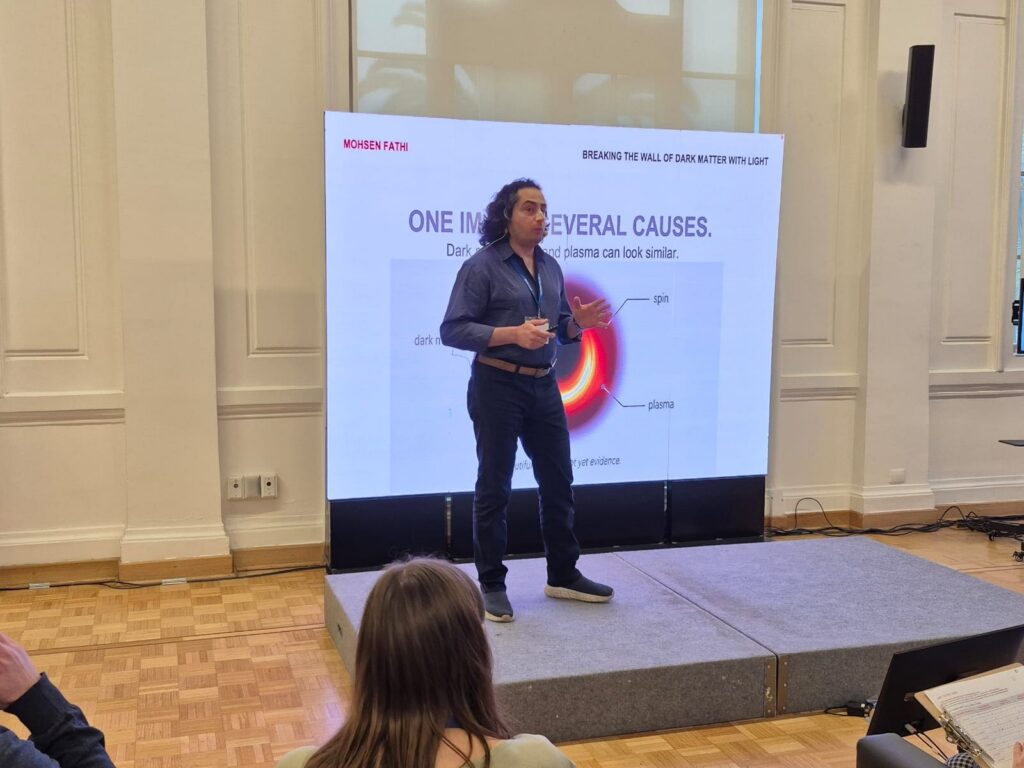
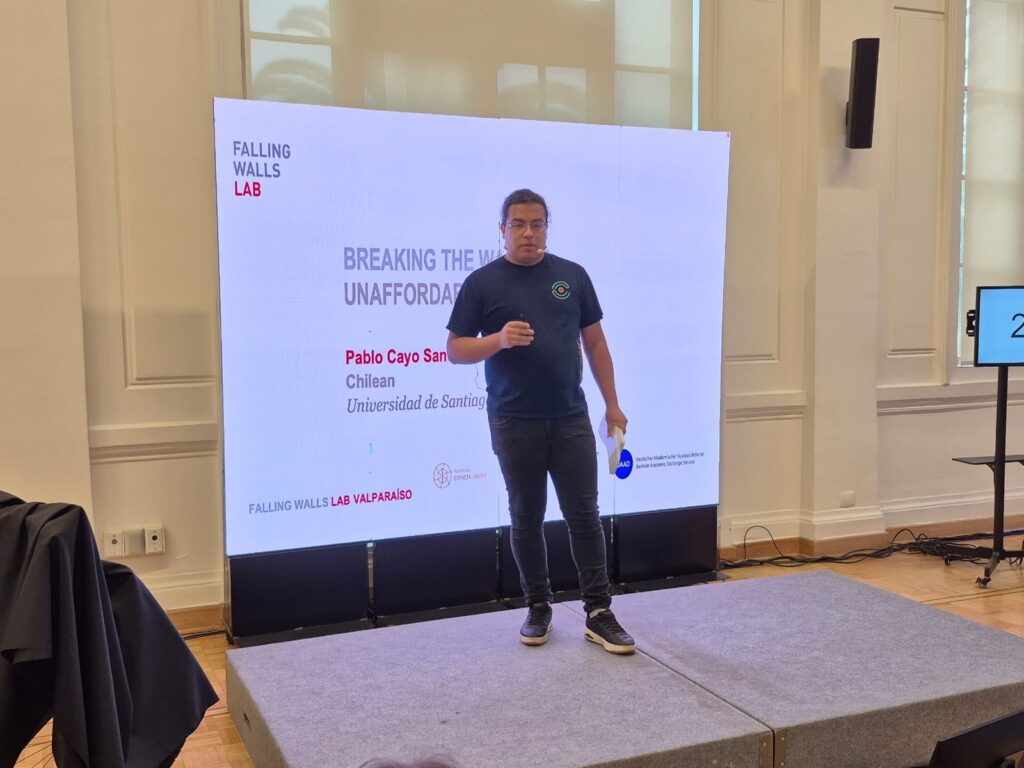
During the event, the finalists presented their projects in the Falling Walls Lab’s signature format: each participant had three minutes to present their proposal, followed by a brief Q&A session with the jury.
The initiatives addressed challenges related to health, education, rehabilitation, environmental pollution, astronomy, aquaculture, urban accessibility, and research and development, among other areas.
Among the participants was Sebastián Suárez of the Pontifical Catholic University of Valparaíso, who presented the initiative “Breaking the Wall of Trial-and-Error R&D.”
Winners of Falling Walls Lab Valparaíso, Chile 2026
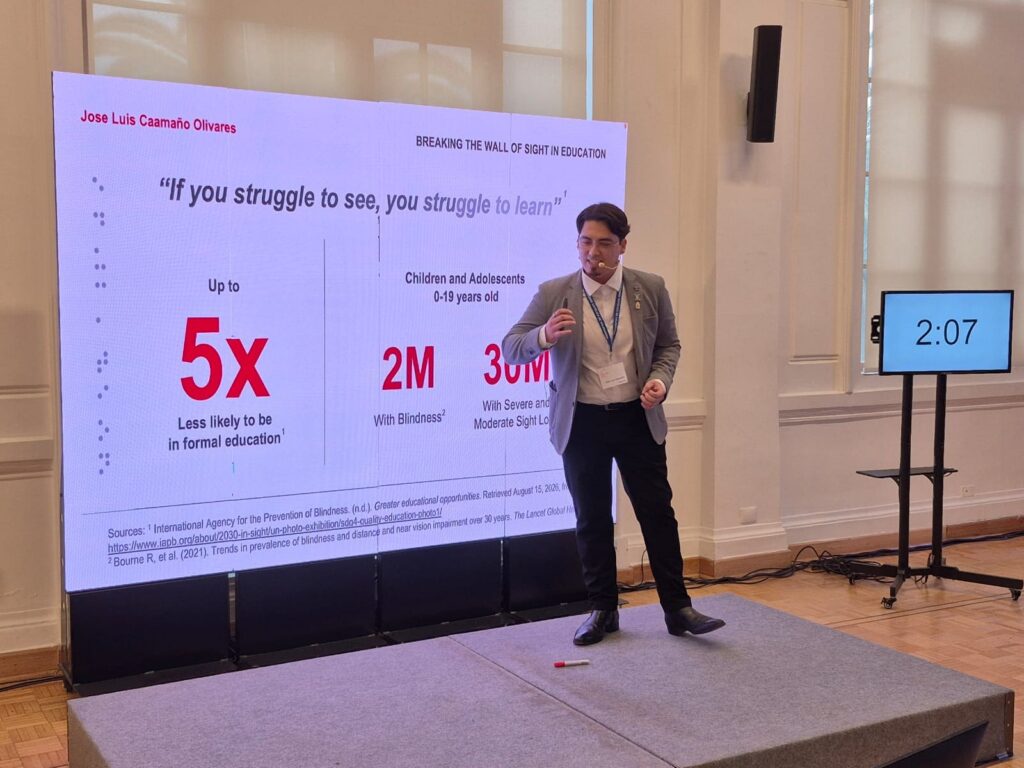
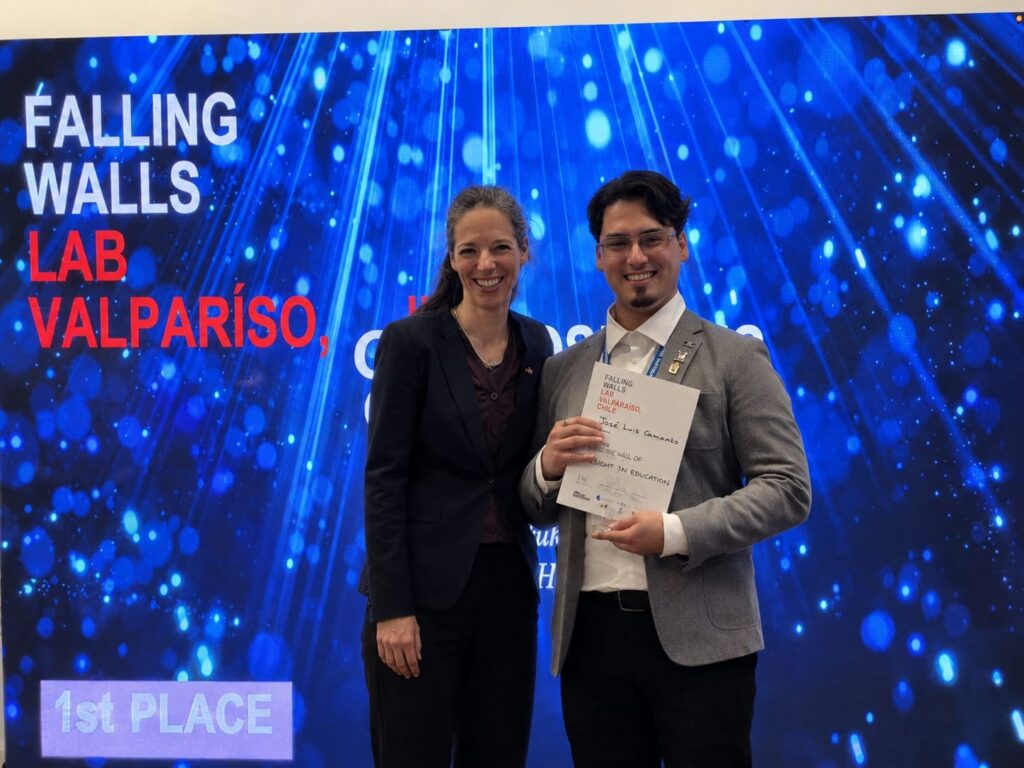
First place was awarded to José Luis Caamaño, from the University of Santiago de Chile, for his proposal “Breaking the Wall of Sight in Education.” With this recognition, he will represent Chile at the international Falling Walls event to be held in Berlin, Germany.
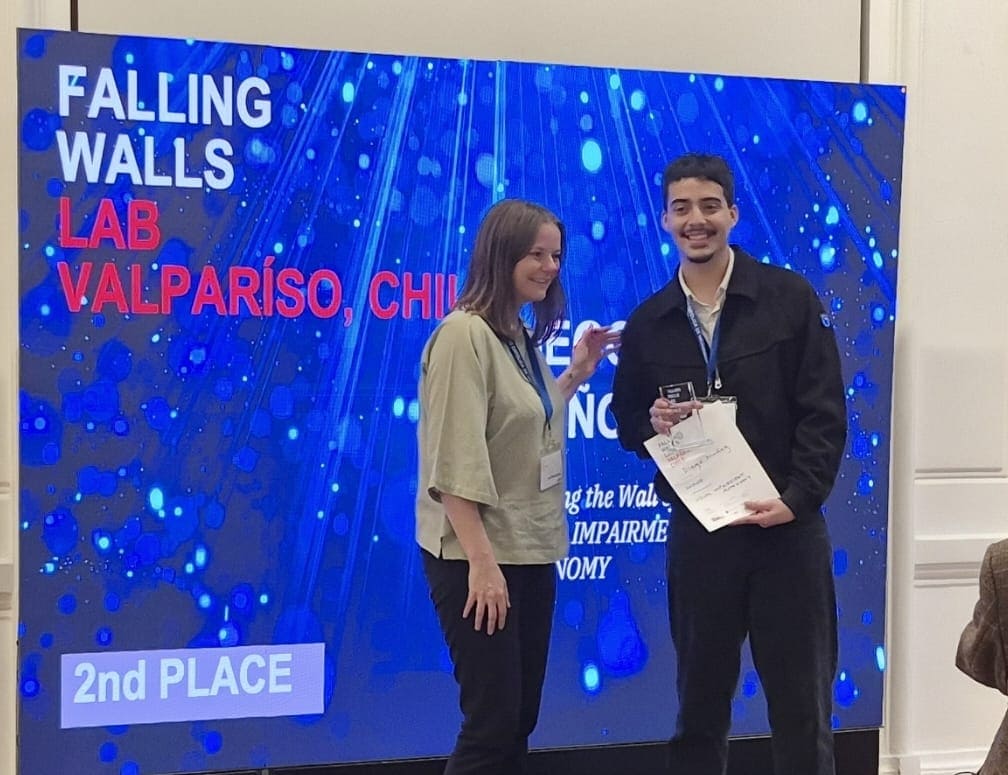
Second place went to Diego Muñoz of the University of Concepción, who presented “Breaking the Wall of Visual Impairment Autonomy.”
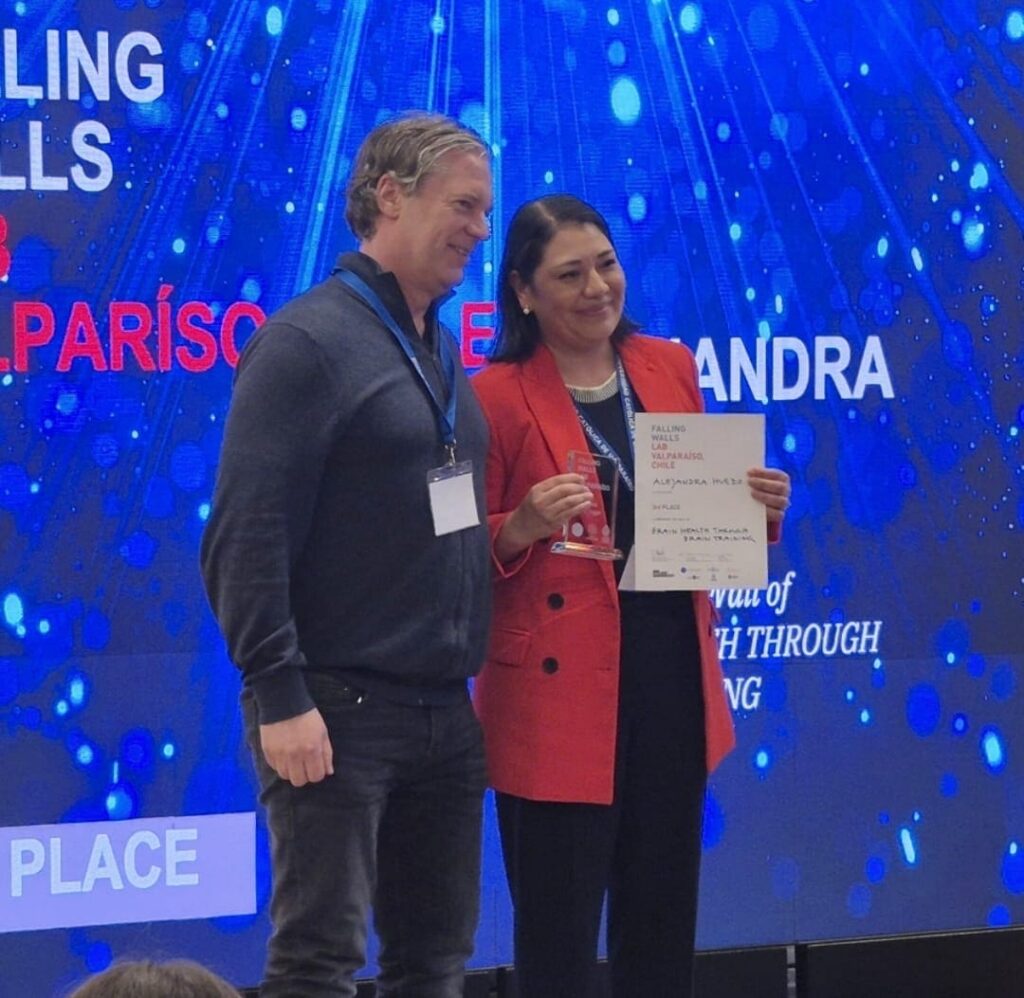
Third place went to Alejandra Huezo of Andrés Bello University for her proposal titled “Breaking the Wall of Brain Health Through Brain Training.”
As part of the Pontifical Catholic University of Valparaíso’s recognition of the three winners, the Director General of International Affairs, Orlando de la Vega Luna, awarded three scholarships to study English through Idiomas PUCV—one for each of the top three finishers. In this way, the University provided an incentive aimed at strengthening the language skills of the recognized participants.
The top prize from the Falling Walls Lab will allow José Luis Caamaño, this year’s winner, to represent Chile at the Falling Walls Science Summit, which will take place in November 2026 in Berlin, Germany. The event brings together representatives from various countries and stakeholders from the fields of science, economics, politics, and other areas.
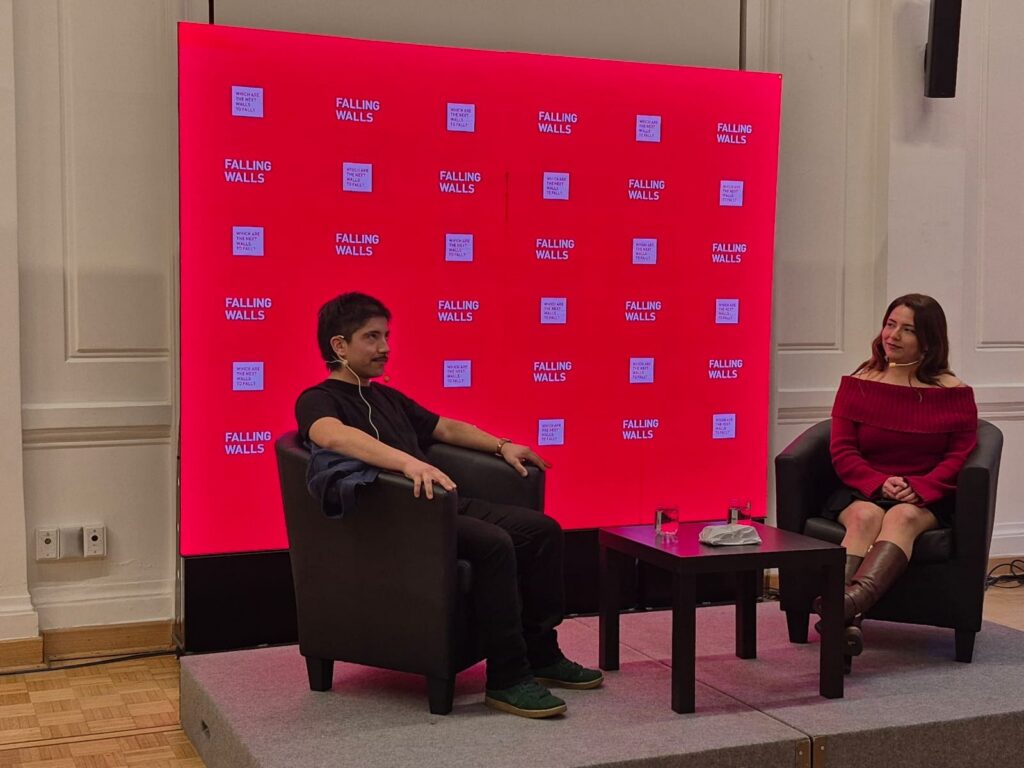
The event held at PUCV also featured a discussion with Fernanda Rokha Sánchez-Umaña, winner of the 2025 Falling Walls Lab with “Breaking the Wall of Algorithmic Distortion,” and Lucas Quiroz Castillo, winner of the 2024 edition with “Breaking the Wall of Clean Electromobility,” who shared their experiences with the attendees.
Falling Walls Lab Valparaíso, Chile is organized in partnership with the DAAD, Fundación Ciencia Joven, and the PUCV, along with other institutions involved in scientific and academic cooperation.